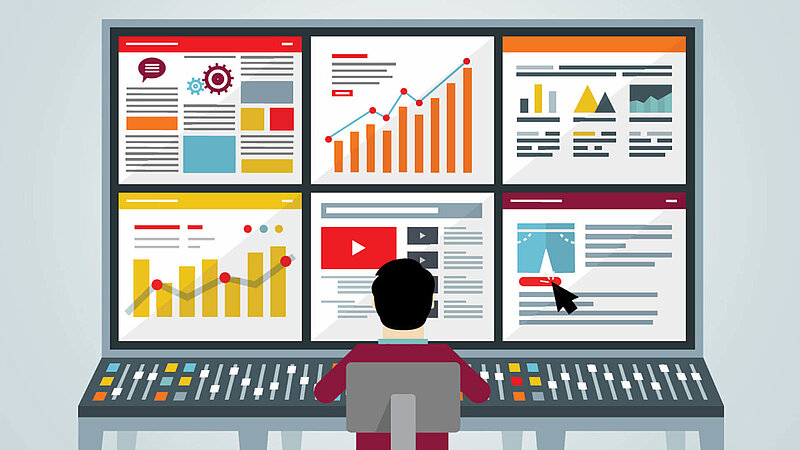
Programmatic advertising is how most digital advertising is bought today: no longer by negotiating placement by placement with individual publishers, but through automated platforms that decide, within milliseconds, which ad to show to which person, on which site or app and at what price.
In this guide we look at what programmatic is, how it works, which formats and channels it covers and how to use it effectively and safely for your brand.
What programmatic advertising is
Programmatic advertising is the automated buying of digital ad space based on data and algorithms. Instead of buying “space on website X”, the advertiser buys the right impression: an ad view by a person with certain characteristics, in the most suitable context, at the agreed price.
How it works
The main players are:
- DSP (Demand Side Platform): the platform advertisers or agencies use to buy, setting targeting, budgets and bids;
- SSP (Supply Side Platform): the platform publishers use to sell their inventory;
- Ad exchange: the marketplace where supply and demand meet;
- data: the advertiser’s first-party information, contextual data and audience segments that guide buying decisions.
When someone opens a page or an app, the ad space is auctioned in real time and the advertiser’s platform decides whether and how much to bid, based on campaign goals.
Buying models
| Model | How it works | When to use it |
|---|---|---|
| Open auction (Real-Time Bidding) | Real-time auction open to all advertisers | Wide reach, lower costs |
| Private Marketplace | Invitation-only auction on quality inventory | Premium contexts, more control |
| Programmatic Guaranteed | Direct deal with the publisher on volumes and prices, executed automatically | Brand campaigns with guaranteed placements |
Not just banners: programmatic channels
- Display on websites and apps;
- video, including streaming; learn more on our video advertising page;
- Connected TV: ads on smart TVs and streaming platforms;
- digital audio and podcasts;
- Digital Out of Home: digital screens in stations, shopping centres and streets.
Benefits
- Precision: reach the right audience in the right context;
- efficiency: budget goes where it performs best;
- flexibility: campaigns can be optimised in real time;
- measurability: detailed data on views, clicks, conversions and visits;
- scale: access to thousands of sites, apps and channels from one platform.
Data and cookies: what is changing
For years programmatic relied heavily on third-party cookies. Today tracking is increasingly limited by browsers, operating systems and consent rules, even though Google has decided not to remove third-party cookies from Chrome entirely. That is why these are becoming central:
- first-party data, collected directly with customers’ consent;
- contextual targeting, based on page content rather than the person;
- privacy-friendly identity solutions and data clean rooms.
Quality and brand safety
Automation needs control. A well-managed programmatic campaign includes:
- allow and block lists of sites, to avoid unsuitable contexts;
- viewability checks and fraud protection;
- frequency capping, so the same person does not see the same ad too often;
- transparency on where ads ran and at what cost.
FAQ
Is programmatic suitable for SMEs?
Yes, with calibrated budgets and clear goals. For many SMEs it is an effective way to reach precise audiences locally or nationally.
How does it differ from Google Ads or Meta Ads?
Google Ads and Meta Ads mainly sell space within their own ecosystems; programmatic lets you buy across thousands of different sites, apps and channels from a single platform.
How are results measured?
With metrics tied to the goal: reach and frequency for awareness, completed views for video, website visits and conversions for performance campaigns.
Want to plan a programmatic campaign?
E-Business Consulting plans and runs programmatic advertising campaigns for businesses: audience definition, choice of channels and formats, inventory quality control and continuous optimisation, integrating first-party data and your CRM. Get in touch with us for a conversation.